Magent 架构
Magent 是一个 Emacs-native 的 AI coding agent。它的核心设计判断是:重度 Emacs 工作流里已经有大量活状态,包括 buffer、mode、project、Magit、Org、xref、LSP、process buffer,以及用户长期积累的交互习惯。因此 Magent 不是把终端 agent 包进 Emacs,而是在 Emacs Lisp 里实现 agent runtime。
系统边界刻意保持清晰:
- Provider transport、HTTP/SSE、模型选择和 API key 继续交给
gptel,通过gptel-request调用。 - 会话式交互只支持
agent-shell~,中间由进程内 ACP adapter 连接。显式注册的 Action 也可以暴露受信任的 ~M-xcommand wrapper,但不会因此形成第二套会话 frontend。 - Agent 执行、Action Invocation、工具编排、权限决策、会话、技能、能力解析和 child-agent jobs 由 Magent 自己管理。
- Codex 风格的 seatbelt、bubblewrap、sandbox 和 shell isolation 不在范围内。Magent 的 permission 是工作流确认和审计,不是 OS 安全边界。
系统边界
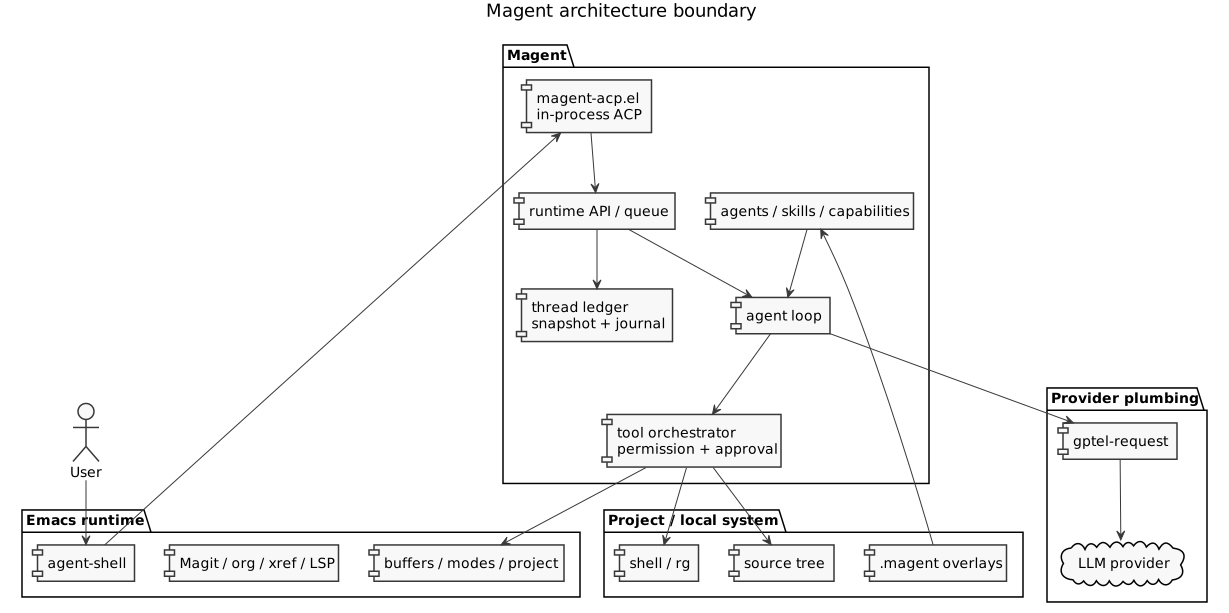
这个结构让替换点保持可见。换 provider 应该局限在 magent-sampling-gptel.el 和 gptel 配置里;换 frontend 应该局限在 magent-agent-shell.el~、~magent-acp.el 和 magent-runtime-api.el 附近;Action registration、Workflow、Step 或 Invocation 的修改应该通过 ~magent-action.el~,isolated Action persistence 属于 ~magent-action-session.el~,交互 viewer 属于 ~magent-action-session-view.el~;其余持久化和恢复修改应该通过 ledger/session 模块;工具策略应该通过 permission 和 orchestrator 模块。
TRAMP locality 契约
Remote project 只改变 resource 所在位置,不改变 Magent control plane
所在主机。agent-shell UI、进程内 ACP placeholder、gptel transport、runtime
queue、ledger/session persistence、Action control flow、Doctor、skill 安装、
child-agent coordination、~emacs_read~、~emacs_eval~、~emacs_eval_live~ 与
web_search 都留在本机。Remote session key 的规范化不会探测 TRAMP
filesystem;agent-shell 渲染 remote file context 时也不会进行 image 或
containment 查询。
Canonical tool catalog 为每个工具声明唯一 locality:
| Locality | Tools | 契约 |
|---|---|---|
local |
emacs_read~、~emacs_eval~、~emacs_eval_live~、~read_tool_output~、child-agent tools、~update_plan~、~web_search |
在 Emacs host 执行;~emacs_eval~ 只把 TRAMP project root 当作数据传给本地 child。 |
tramp-file |
read_file~、~write_file~、~edit_file~、~glob |
本地 Elisp 调用 Emacs file API;remote resource 通过 TRAMP 访问,不启动 project-host process。 |
project-process |
bash~、~grep |
唯一允许在 project host 启动的工具;remote execution 显式使用 TRAMP process handler;search 选择 rg 或同主机的 ~git grep~。 |
Execution locality 绝不只由 ambient default-directory 决定。
project-process executable 必须在 project host 上解析;失败就在该边界明确返回,
不会回退到本地主机或本地 home。
grep tool 只会在同一 project host 缺少 rg 时选择
~git grep –no-index –exclude-standard~,不会静默替换为 recursive/ignore
语义不够 portable 的普通 ~grep~。Git backend 使用 POSIX extended regex,并在
tool-result metadata 中记录 backend identity。受信任的 Action argv Step 与 Doctor process
probe 均为 local-only,并拒绝 remote working directory。这是 locality/failure
契约,不是 OS sandbox。
依赖层次
Emacs Runtime
Emacs 不只是宿主进程。Magent 依赖活的编辑器状态:buffer、major mode、project root、timer、process、URL、JSON、 special-mode 和用户安装的包。固定形状、受信任的 live inspection 通过 emacs_read 完成;任意 emacs_eval 默认在一次性的 child Emacs 中运行,只有单独命名的 emacs_eval_live 会在用户正在运行的 Emacs 中执行任意代码。
Provider Plumbing
magent-sampling.el 定义 provider-neutral request/event。 magent-sampling-gptel.el 负责一次 sampling request:调用 gptel-request ,再把 gptel callback 转成 Magent normalized events。这个 adapter 可以隐藏 gptel callback/FSM 细节,但主 loop 只消费 normalized events。Reasoning event 与 assistant text 分开保存;普通 agent turn 缺少最终 assistant text 时会明确失败;直接 sampler 保留各自允许空结果的契约,reasoning 不作为最终回答。
Thinking policy 在 adapter boundary 之前保持 provider-neutral。Core runtime 只使用
auto~、~enabled 和 disabled~;只有存在可靠 wire mapping 的 backend 才翻译显式
mode。DeepSeek 使用原生 ~thinking.type request object。显式 disable 会抑制 reasoning
effort;未知映射会在 provider dispatch 前失败,而不是静默采用 provider default。
每次 provider continuation 都会开始一个新的 sample 边界。公开的 terminal result 只包含最终 assistant message;没有原生消息阶段的 provider 使用最后一个 sample 的 assistant text,ledger 则保留完整 turn transcript 和 tool history。这个分离是确定性的,不会触发隐藏的 finalization 或 recovery request。
Prompt 装配与信任边界
magent-agent.el 按固定顺序装配每次 agent-loop 的 file-backed system message。
magent-system-prompt 始终位于第一层,后面是可选的 agent-specific role prompt,
再依次加入 project-root context、从项目根到请求相关本地文件逐层发现的适用
AGENTS.md~、~magent-context-provider-functions 返回的可信 request-local context,
以及 capability/显式 instruction skills。最后追加短小的 runtime
trust policy,因此内置 utility agents 和 custom agents 能保留各自的输出契约,同时
共享 instruction provenance 与 permission 不变量。项目指令发现不会越过 canonical
project root,并受 magent-project-instructions-max-bytes 总大小限制。
Context provider 是受信任的本地 Elisp 扩展。每个 provider 接收 user prompt、request context 和 project root,并可返回一个自包含的 system-context block。Provider 按配置 顺序运行;异常或非法返回值会记录日志并被忽略。用户消息、文件、buffer、日志、命令 输出、tool result、网页和 conversation history 仍只保持各自的数据角色;其中伪装成 prompt 或高优先级标签的文本不能授予权限,也不能把自己提升成 runtime instruction。 Prompt 规则只负责引导模型行为,真实的 tool availability、approval 与 permission enforcement 仍由 tool runtime 和 orchestrator 负责。
Base prompt 只保留跨任务 coding 行为;tool schema 由 gptel 提供,Emacs-specific
流程通过 instruction skills 渐进式披露。~web_search~ 返回标题、URL、摘要与来源引用;
web_open 抓取正文到会话私有的不可变快照,~web_find~ 在快照中查找。三者共用
web_search 权限。默认搜索源为免密钥 Bing RSS,可选 Tavily 与 gptel 模型独立;
搜索源注册、依赖和限制见 README。
所有 bundled Org prompt resource 都列在 prompts/manifest.txt~。测试要求 manifest
对每个 bundled ~.org prompt 恰好覆盖一次,因此新增 prompt layer 时必须同时更新
manifest 和 package data recipe。
UI 与 Runtime API
受支持的会话式 frontend 是 agent-shell~。~magent-agent-shell.el 注册 Magent 的 agent-shell 配置,~magent-acp.el~ 实现进程内 ACP adapter。ACP text 与 resource block 会分开规范化:完整结构化输入存进 turn metadata,并以 user role 重建给模型;本地 file:// resource 只额外提供 scoped file path,供项目指令发现与 capability resolution 使用。每个 session/prompt 到达后,ACP 会把已注册 slash command 投影分派给 magent-action.el 中的 Action,普通 prompt 则直接提交给 magent-runtime-api.el~。Action-owned agent turn 和 Workflow Step 同样通过该 runtime API 提交;Action 也可以不进入通用 agent loop 而直接完成。~magent-runtime-queue.el 采用会话内 FIFO、会话间并发的执行模型,包括同一项目内的独立会话,同时保留 session-scoped 和 exact-submission cancellation。显式 M-x command wrapper 复用 Action Invocation lifecycle,不会形成并行的会话 frontend。
Ledger 与持久化
持久化真相源是 thread -> turn -> item ledger。 magent-ledger.el 定义状态对象、状态转移和 journal events, magent-runtime-api.el 创建用户 submission, magent-runtime-queue.el 调度实际执行, magent-session.el 以原子替换方式保存 materialized snapshot 和内存 append-only journal 的有界尾部。snapshot 记录 ~last-event-seq~,因此保留的旧事件可供检查,但恢复时不会重复 replay。
Consumer 必须从唯一的 ledger 状态显式选择
ledger~、~transcript~、~provider~、~compaction 或 audit context view;这些
view 不能互相冒充 canonical state。
工具、权限与审计
magent-tools.el 通过单一 canonical catalog 暴露 19 个 gptel-tool :
read_file、write_file、edit_filegrep、glob、bashemacs_read、emacs_eval、emacs_eval_live、read_tool_outputspawn_agent、send_agent_message、wait_agent、list_agents、close_agentupdate_plan,web_search,web_open,web_find
read_file 强制指定 source=disk 或 source=live-buffer~。live-buffer source
只读取已经存在的 file-visiting buffer(包括未保存修改),不会打开文件或回退到
磁盘。读取和 grep 会返回 SHA-256 revision;~write_file 与 edit_file 必须携带
expected revision(创建文件时用 ~absent~),并拒绝 stale disk state 和 dirty
visiting buffer。Clean visiting buffer 通过 Emacs 修改并保存,没有 visiting buffer
时则原子替换磁盘文件。
emacs_read 只接受固定、受限的 live-state operation,不接受 Elisp form 或任意
function name。~emacs_eval~ 每次启动新的 emacs -Q --batch 进程,因此被执行代码
中的 kill-emacs 或死循环不会杀死、卡住 parent Emacs。这只是进程级故障隔离,不是
OS sandbox;child 仍保有当前用户的文件、进程和网络权限。~emacs_eval_live~ 保留对
live buffer 和 package state 的任意访问,也仍可能卡死或崩溃主 Emacs。两个任意 eval
tool 都使用不可 bypass 的 once-only approval,不接受 session-wide allow。内置
build 和 general 可以暴露 live eval,受限内置 agent 不暴露。~/authority~ 会
显示当前 agent 的精确工具暴露、decision source、resource rules、approval policy
和 execution boundary。
Catalog 是 tool name、implementation 和 permission key 的唯一事实来源。普通
request 选择 :all~;Action 的 agent Step 通过 ~:tools 传入 exact allowlist,
随后再应用 agent permission。所有 implementation 都返回结构化
magent-tool-result~;只有 provider boundary 会转换为文本,非结构化结果会被拒绝。
过大的 model-visible result 在中心位置截断,完整结果写入当前
session 私有、带 TTL/quota 的 spill,只能凭 opaque id 通过 ~read_tool_output
分页
读取。spill identity 同时包含精确 runtime scope 与 session id;分页使用从 1
开始的字符偏移,因此超长单行也能完整取回。~glob~ 使用有界的 event-loop slices。
magent-tool-orchestrator.el 负责权限解析、必要时请求 approval、执行工具、写 audit,再把结果交回 loop。 magent-permission.el 按声明顺序选择第一个匹配规则;~*~ 只是普通的显式 glob 规则,没有隐式 fallback。无匹配规则时 default allow。
Breaking tool migration
这个 catalog 刻意不提供 compatibility alias:
- 把
read_buffer(path, ...)改为 ~read_file(path, source=“live-buffer”, …)~。 - 每个
read_file调用现在都必须显式设置 ~source~。 write_file和edit_file必须携带前一次read_file或grep返回的 ~expected_revision~;只有创建新路径时使用 ~absent~。- 以前用
emacs_eval查询 live state 的代码应改用固定的emacs_readoperation。任意 live 行为必须明确使用emacs_eval_live并逐次批准;emacs_eval现在表示一次性 child-process evaluation。 - Custom Action 的
:toolsallowlist 和 skill tool 声明必须使用新名称;exact tool resolution 会直接拒绝未知旧名称。
请求生命周期
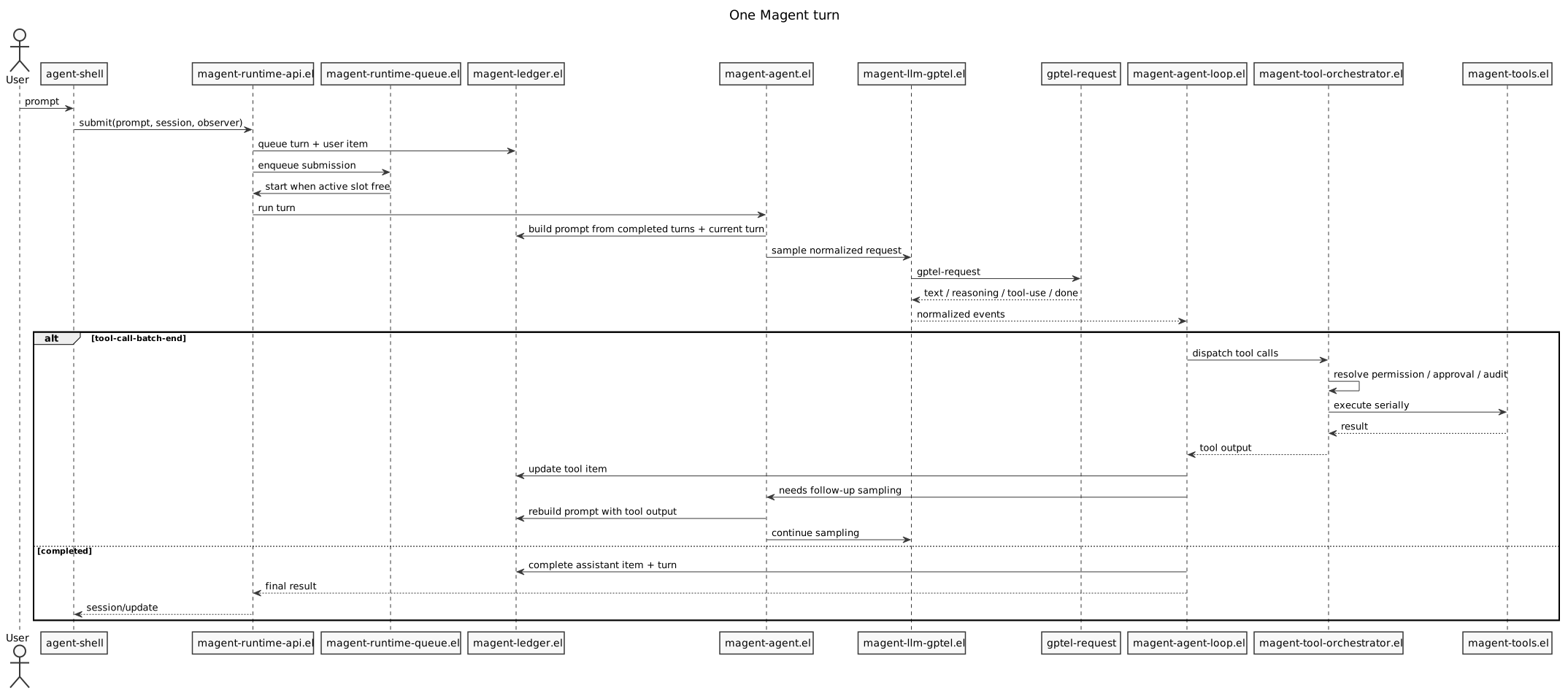
- 用户 prompt 通过 agent-shell 进入 ACP
session/promptrequest。 - ACP 按 runtime session 的精确 scope 解析已注册 slash command projection;未知 slash input 仍作为普通 prompt。
- 对应 Action 进入 ~magent-action.el~,执行参数处理、feature preflight 和 session-policy 设置,然后启动 generator-backed Workflow。Process 和 callback Step 不进入 agent queue;agent 与 terminal Answer Step 进入 ~magent-runtime-api.el~,普通 prompt 则直接进入同一 API。
magent-runtime-api.el先解析 request-local agent 和精确 tool set,把全部执行输入冻结到唯一的 ~magent-request-context~,再记录 queued turn 和 completed user item;submission 本身只保留 queue lifecycle、精确 runtime session 与该 context。magent-runtime-queue.el在该会话的执行槽空闲时启动 turn;其他会话(包括同一项目)可同时运行。magent-agent.el只消费 canonical request context,解析 active capability instructions,并启动允许的工具,不再重建一份并行 request specification。magent-sampling-gptel.el调用gptel-request发起一次 sampling。magent-agent-loop.el接收 normalized text、reasoning、tool-call 和 completion events。- tool call 累积到
tool-call-batch-end后,通过 orchestrator 串行执行。 - tool result 更新同一个 tool item,而不是创建一条独立的持久记录。
- 如果 tool output 需要返回给模型,
magent-agent.el从 ledger 重建 prompt 并开始下一次 sampling。 - 如果 provider 返回空 assistant text 并明确完成,
magent-agent.el用empty-completionmetadata 将本轮标记为 failed,不再发起请求。 - completion、failure、abort 或 queued drop 会把 turn 转到 terminal state,并通知 ACP observer。
- 普通 prompt 直接用 turn result 结束 pending ACP request。对于 Action-owned work,runtime callback 会先返回 Action Invocation,再由其 terminal lifecycle 结束 ACP request,或向 interactive caller 报告结果。
这个 continuation 模型接近 Codex:工具结果会触发后续采样;但实现仍然是 Emacs-native 且由 gptel 承担 provider transport。
功能层
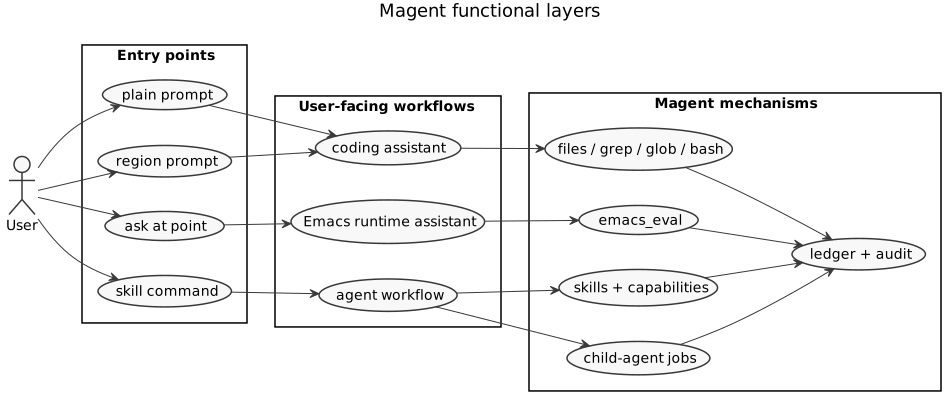
从功能面看,Magent 可以按四条主线使用。第一条是 coding assistant:读代码、搜代码、改文件、跑测试、解释错误、生成 commit/PR 风格总结。第二条是 Emacs runtime assistant:普通 live inspection 使用 emacs_read~,只有显式批准的任意 live operation 才使用 ~emacs_eval_live~。第三条是 agent workflow:用 skills、capabilities 和 child-agent jobs 固化或拆分任务。第四条是 explicit Action workflow:从 agent-shell slash input 或已暴露的 ~M-x command wrapper 调用同一个 registered Action。Action 可以复用当前 conversation,也可以创建 isolated durable session;Doctor 是内置的 isolated 示例。
因此 Magent 的功能设计不只是“一个聊天框和若干工具”。它把 Emacs 工作流切成可被 agent 调用、审计、恢复并投影回 UI 的动作。
扩展模型
Magent 有三层 file-backed 扩展:
.magent/agent/*.md下的 custom agents。- bundled
skills/~、用户目录 ~~/.emacs.d/magent/skills~,以及项目 ~.magent/skills/下的 skills。 - 带
capability: true的 skill frontmatter 中的 capability metadata,以及用户 capability 目录和项目.magent/capabilities/下的独立 ~CAPABILITY.md~。独立文件只用于触发 metadata 不应该归属于单个 skill 的场景。
Action 是另一层 Elisp-native 扩展。~magent-action.el~ 是一个 deep module,
统一拥有 generator Workflow DSL、managed Step runtime、分层 registry 和 Invocation
lifecycle。Action 声明 slash/interactive exposure、current/isolated session policy、
参数处理、feature/tool preflight、progress、取消和完成行为。普通 Elisp 负责控制流;
由 Magent 管理的 agent、terminal Answer、argv process 和 callback Step 提供异步
等待与 activity 记录。Agent Step 分离 prompt 文本、模型可见的 popwin 风格 buffer
快照、精确 tool requirements 和 request-local agent/skill 选择,并从 Invocation
继承 frontend request context;它也可以冻结 request-local reasoning effort 和 thinking
mode。Content blocks 和 canonical Action metadata 由内部
持久化。高级受信任 package 可以拥有更长的异步 Invocation,但不会接触 ACP 或 queue
internals。内置 /explain~、~/fix~、~/init~、~/review 和 /test
prompt Actions 是 magent-action-builtins.el 中的数据项;系统从对应 Org prompt
resource 统一生成 terminal Workflow。
Invocation 会先锁定 terminal result 再执行 cleanup,因此 Step 失败时只取消自己 拥有的 submission,避免同步取消 callback 覆盖原始失败,或在 ACP 完成后继续工作。 Finalization error 是 terminal failure,不会伪装成成功结果。
magent-skills.el 还拥有 frontend-neutral、scope-aware 的 skill descriptors。ACP
会把每个 instruction descriptor 投影成 ~$name~,agent-shell 将其显示为
~/$name~,分派时则作为带显式 skill selection 的普通 runtime turn。该路径不要求
Action Invocation lifecycle,也不会进入 Action registry。Project agent、skill、
capability 与 Action definitions 都携带 canonical project scope 并保留在各自
registry 中,不再维护平行的 skill catalog snapshot。ACP 的发现、分派和 request
execution 都按 runtime session 的精确 scope 解析,因此多个 project session 可以
安全共存。未来 frontend 可以消费同一 descriptor API,同时把 command projections
和 skills 展示为两个独立入口。
magent-action-session.el 为 :session-policy 'isolated 的 Action 提供持久化、
ledger 记录和取消;~magent-action-session-view.el~ 单独负责交互式列表与查看。
两者都不拥有第二套 registry 或 context 类型。~/doctor~ 同时提供
magent-action-run-* wrapper,两种入口执行相同 Invocation lifecycle。它由
magent-action-enabled-builtins 控制注册;Custom 变更会原子刷新 registry 和
frontend discovery。新 session
写入 magent-session-directory/actions~。旧 ~commands/ 格式既不迁移、也不读取,
文件原样留在磁盘上。
magent-action-run-doctor 是安全敏感的 direct-pipeline 场景。 magent-action-builtin-doctor.el
中的受信任只读 probes 采集有界 JSON-safe 数据;数据在持久化或发送一次
无工具 provider request 前,会经过 magent-redaction.el 的路径规范化和
脱敏。Doctor 不进入通用 agent loop,也不会暴露 emacs_eval 、shell 或
文件工具。自定义 probe 属于受信任 Elisp,不是 sandboxed code;详见
DOCTOR.zh.org。
Skill 只支持 data-only instruction Markdown,并注入 system prompt。需要执行能力时,
使用 trusted Elisp Action 或 canonical catalog 中的一等 tool;Magent 不加载
SKILL.md companion code。Capability 会根据当前上下文打分,激活少量
instruction skills。自动激活除了 context score 之外,还必须命中当前 prompt
中的显式 keyword intent;只有 mode、feature 或 file 命中时仍保持 suggested。
Keyword 使用词边界匹配;如果 linked skill 声明的工具对 selected agent 不可用,
也不会被注入。Agent-shell 的 session config 提供 Automatic capabilities
开关,可关闭自动层而不影响显式选择的 skills。
magent-skill-manager.el 是独立且按需加载的用户维护层:它搜索 skills.sh,
解析本地或公开 GitHub source,预检后把 instruction skill 复制到 canonical 用户
目录,记录 provenance,并永久删除精确选中的用户级安装。它不是 model tool,
不会管理 project-local definitions,也绝不读写 ~~/.agents/skills/~。
这些概念的区别是:
Action是 executable trusted-Elisp 领域抽象,可投影为 slash command、 interactive command 或两者。Prompt Action 通常拥有一个 agent turn;高级 Action 可以拥有多个异步 Step。command是 frontend/protocol 对 Action 的投影,不是第二套扩展抽象。skill是可复用、data-only 的模型说明,在普通 turn 中显式或自动选择; 它不会转换成 Action。capability是自动激活规则:由modes、~features~ 、~files~ 、~prompt-keywords~ 、~disclosure~ 和risk等 resolver metadata 描述什么时候为当前 turn 选择一个或多个 skills。只有 context 的匹配会作为可检查的 suggestion;active disclosure 还要求当前 user prompt 命中有词边界的 keyword。- skill-backed capability 是 contextual capability 的常见形态:某个
SKILL.md声明capability: true后,resolver 会在当前 context 与 prompt intent 同时匹配且所需 工具可用时自动激活同名 skill。
产品取舍
Magent 更接近 “gptel + stateful agent runtime”,不是 gptel 的替代品。相比在 Emacs 里包一层终端 agent,Magent 能检查和利用活的编辑器上下文。相比 Codex 或 Claude Code,Magent 不追求多端覆盖和强 OS 隔离;它的优势是低摩擦地进入长期使用的 Emacs 环境。
实际开发时应保留这些边界:
- Provider 工作留在 gptel 和
magent-sampling-gptel.el。 - 受支持的 frontend 工作放进
magent-agent-shell.el,不要放进不受支持的 UI 文件。 - durable workflow state 留在 ledger。
- child-agent 行为保持和
docs/AGENT_JOBS.org一致。 - 把 permission 视为确认/审计工作流,而不是 sandbox 安全。